Showing posts with label Indian Festival. Show all posts
Showing posts with label Indian Festival. Show all posts
Wednesday, January 26, 2011
Republic Day Of India celebrated in Q8

Republic Day of India celebrated in USA
To know about 62nd Republic Day celebration of India in USA, can check out the following websites
http://www.indianembassy.org/ and
http://www.cgihouston.org/
http://www.indianembassy.org/ and
http://www.cgihouston.org/
Republic Day Supplement IIK,Q8
Tuesday, January 25, 2011
Republic India
and its history is a unique tale of the past. It is a civilization united by its diversity, richness of culture, the glory of past, the turbulences and triumphs. Home to some of the most ancient civilizations in the world, India was formally ruled by the British for almost ninety years before gaining independence in 1947.
capital, New Delhi, where symbols of the great nation's military might and cultural wealth are displayed in what is the world's most impressive parade. All Government buildings are illuminated lending the city the atmosphere of a fairyland. This day is celebrated with much zeal and pride all across the nation. India gained independence on August 15, 1947. But till January 26, 1950, it did not have the proper law of the land for ruling the country. On this particular date in1950 the constitution of India came into force and India became true nation state with true sovereign and republic sense. Our constitution was formed by the Indian Constituent Assembly. The Indian Constituent Assembly met on December 9, 1946. The Assembly appointed a number
of committees to report on the various aspects of the proposed constitution. The
Constituent Assembly had appointed Dr. B.R. Ambedkar as the Chairman to draft
the Constitution. The committee finalized the draft with 395 Articles and eight
Schedules and was adopted by the Constituent Assembly on November 26, 1949. The
Indian Republic officially came into being on January 26, 1950. January 26 was
not some random date picked out of the calendar. It was on this date in 1927
that the Indian National Congress, then fighting its non-violent war for freedom, voted for complete independence as against 'dominion status'. It was the date when members of the INC took the pledge to work towards a 'sovereign democratic Republic' of India.
and cultural diversity covers an 8 km route, starting from the Rashtrapati Bhavan through the picturesque Rajpath down to India Gate before winding up at the historic Red Fort in Old Delhi.The events of the day begin with the Prime Minister laying a wreath at the Amar Jawan Jyoti - India Gate. He then drives up to the central enclosure and awaits the arrival of the President and a Chief Guest of the occasion who is normally a Head of other Country. On the arrival, the honorable President meets the dignitaries present and unfurls the National Flag. Following this the National Anthem is played with a 21-gun salute to the National Flag. After this a brief investiture ceremony takes place during which the President presents India's top gallantry awards, the Param Veer Chakra, the Veer Chakra and the Maha Veer Chakra to the outstanding soldiers from the defense services. After this, four helicopters from the armed forces fly past the parade area showering rose petals on the audience. Each chopper carries a flag - the first being the Indian flag and the other three the flags of the Army, the Navy, and the Indian Air Force. The march past begins immediately
after the fly past. The President, as Commander-in-Chief of the Armed Forces, takes the salute of the mechanised, mounted and marching contingents of the Army, Air Force, Navy, Paramilitary forces, Police and the National Cadet Corps. After the march past comes the cultural extravaganza consisting of floats presented by the various states and performances by school children. After the floats, the bravery awards winning children from all over the country enter on elephants.
can parade so many ethnically different people in splendid uniforms.
India, states are fighting for sovereignty. This leads me to think are we
really a truly sovereign and republic country?
Sunday, November 7, 2010
DIWALI @ Q8
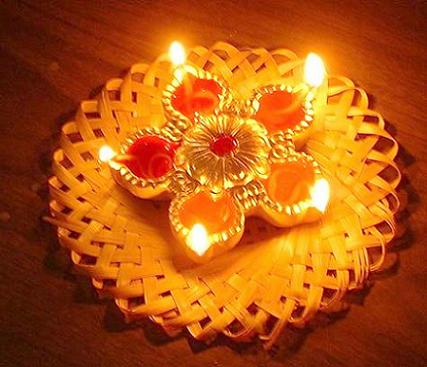
This is perhaps the most well-known of the Indian festivals. It is celebrated throughout India, as well as in Indian communities throughout the diaspora. It usually takes place eighteen days after Dusshera. It is colloquially known as the "festival of lights", for the common practice is to light small oil lamps (called diyas) and place them around the home, in courtyards, verandahs, and gardens, as well as on roof-tops and outer walls. In urban areas, especially, candles are substituted for diyas; and among the nouveau riche, neon lights are made to substitute for candles. The celebration of the festival is invariably accompanied by the exchange of sweets and the explosion of fireworks. As with other Indian festivals, Diwali signifies many different things to people across the country. In north India, Diwali celebrates Rama's homecoming, that is his return to Ayodhya after the defeat of Ravana and his coronation as king; in Gujarat, the festival honors Lakshmi, the goddess of wealth; and in Bengal, it is associated with the goddess Kali. Everywhere, it signifies the renewal of life, and accordingly it is common to wear new clothes on the day of the festival; similarly, it heralds the approach of winter and the beginning of the sowing season.
It is the Hindu New Year and is either a 3-day or 5-day holiday depending on where you come from. It is a very exciting and colourful holiday. Homes are cleaned to welcome the New Year and windows are opened so that the Hindu goddess of wealth, Lakshmi, can enter. It is believed that she cannot enter a house which is not lit up, so every household burns special Diwali clay lamps (diyas) to light the way for the goddess.
Children have a holiday from school. Presents are given and delicious holiday food is prepared and exchanged. New clothes and jewellery are worn. Parties are held, and dice and card games are played. Fireworks and firecrackers are set off to warn off evil spirits, so it is a noisy holiday too!
The last day of the holiday is a special day for brothers and sisters called Bhaiya-Dooj. Brothers give special presents to their sisters, who cook for them and look after them.
This year Diwali was celebrated on November 5.
Indian community in Kuwait on Friday celebrated the festival of lights Diwali with fervor and gaiety amid bursting of crackers and lighting of lamps. Since it was weekend, people could enjoy and celebrate. People decorated their homes with traditional lamps and lights to celebrate the festival. Areas like Farwaniya, Salmiya and Abbasiya where Indians are living in majority, people gathered in large group, clad in new attire and distributed sweets among their community members and friends and busted crackers. Fireworks were also witnessed in different places in Kuwait. Indian people of a residential building met and distributed sweets n busted crakers. They even had formal get-together/ dinner get-together at any restaurent.
One the first day, we were with our building friends and them went to Salmiya area. The mood of festivity was more vigorous, dynamic and energitic there then in Abu Halifa. We went to our dear friend Sonal's house where we found Vaishali and her family already there. Together we went to the famous Titanic building to enjoy the lights and crakers. We returend and enjoyed in a nearby open field. By that time another friend n floor mate Lata bhabi and her family arrived. We enjoyed a lot...had dinner at Sonal's house and returned. Sonal who stayed with us in our building and floor recently shifted to Salmiya area. Next day on 6 November had a get-together and dinner party at Kohinoor Hotel. Our building kids performed and all enjoyed a lot.
Here are some pictures of Diwali celebration at Kuwait. Most of us made Rongali's in front of our house.


It is the Hindu New Year and is either a 3-day or 5-day holiday depending on where you come from. It is a very exciting and colourful holiday. Homes are cleaned to welcome the New Year and windows are opened so that the Hindu goddess of wealth, Lakshmi, can enter. It is believed that she cannot enter a house which is not lit up, so every household burns special Diwali clay lamps (diyas) to light the way for the goddess.
Children have a holiday from school. Presents are given and delicious holiday food is prepared and exchanged. New clothes and jewellery are worn. Parties are held, and dice and card games are played. Fireworks and firecrackers are set off to warn off evil spirits, so it is a noisy holiday too!
The last day of the holiday is a special day for brothers and sisters called Bhaiya-Dooj. Brothers give special presents to their sisters, who cook for them and look after them.
This year Diwali was celebrated on November 5.
Indian community in Kuwait on Friday celebrated the festival of lights Diwali with fervor and gaiety amid bursting of crackers and lighting of lamps. Since it was weekend, people could enjoy and celebrate. People decorated their homes with traditional lamps and lights to celebrate the festival. Areas like Farwaniya, Salmiya and Abbasiya where Indians are living in majority, people gathered in large group, clad in new attire and distributed sweets among their community members and friends and busted crackers. Fireworks were also witnessed in different places in Kuwait. Indian people of a residential building met and distributed sweets n busted crakers. They even had formal get-together/ dinner get-together at any restaurent.
One the first day, we were with our building friends and them went to Salmiya area. The mood of festivity was more vigorous, dynamic and energitic there then in Abu Halifa. We went to our dear friend Sonal's house where we found Vaishali and her family already there. Together we went to the famous Titanic building to enjoy the lights and crakers. We returend and enjoyed in a nearby open field. By that time another friend n floor mate Lata bhabi and her family arrived. We enjoyed a lot...had dinner at Sonal's house and returned. Sonal who stayed with us in our building and floor recently shifted to Salmiya area. Next day on 6 November had a get-together and dinner party at Kohinoor Hotel. Our building kids performed and all enjoyed a lot.
Here are some pictures of Diwali celebration at Kuwait. Most of us made Rongali's in front of our house.

Rangoli made by ME

Made by my next door neighbour Lata

Made by my friend Vaishali


Monday, September 6, 2010
Rituals and Customs of Janmashtami
Janmashtami festival witnesses many interesting customs and rituals in various states and cities of India. While some rituals are common to all, others are unique and restricted to a particular region or city. These customs and rituals are followed religiously by all the Lord Krishna devotees year after year.
Rituals and Customs Observed during Janmashtami :
Fasting: The most common ritual observed all over during Janmashtami is fasting by devotees on the day of the festival. Devotees fast for the entire day and break it after the birth of Lord Krishna at midnight. People prefer to have only milk and milk products as they were the favourite of Lord Krishna. Some devotees of Lord Krishna go to the extent of keeping 'Nirjal' fast- It involves fasting without having a single drop of water. There are other ardent followers , who keep the fast for two days in the honour of Lord Krishna.
Chanting: Devotees indulge in continuous chanting all day long. They chant mantras and shlokas to please the lord. Religious atmosphere prevails everywhere. Devotees highlight his feats and his divine characteristics. Chanting of 108 names of Lord Krishna is another ritual that takes place in various temples. Chanting of names is accompanied by showering of flowers on the idol of Lord Krishna.
Devotional Songs and dances :
Another popular ritual is singing of songs (bhajans) in the praise of Lord Krishna. Bhajans are an important custom of the midnight celebration during the festival. Dances are also performed by devotees depicting the various events of Lord Krishna.
Staging of Plays or Dramas of Lord Krishna:
Plays depicting various events and accomplishments of Lord Krishna during his lifetime is another important custom during the festival. Both professional artists as well as amateurs stage plays at various places that are widely attended by devotees.
Preparation of Sweets :
According to legend, Lord Krishna was very fond of milk and milk products like butter and buttermilk. He was also fond of Sweets like Kheer, Pedhas etc. Therefore devotees all over make sweets during the festival to please the Lord.
Rituals in South India during Janmashtami :
The houses in South India are beautifully decorated by women on Janmashtami. Various sweet meals are prepared and offered to the Lord. Butter, one of the favourite dishes of Lord Krishna is offered to please him in almost every house. The entire house right from the door to the temple is marked with the footprints of a child. Mixture of water and flour is used to make footprints. This custom creates a feeling of joy among the people as they feel Lord himself has blessed them by entering their homes. The day is marked with the ritual of chanting of the holy Bhagavatam, accompanied by singing of devotional songs and dances.
Ritual in Gujarat :
Gujarat witnesses a very peculiar as well as an interesting ritual by the womenfolk during Janmashtami. Women give up all the household chores like cooking and cleaning etc. to play cards. This is an age old tradition. Women doing mind placing bets during the card session. The exact history of this peculiar tradition during Janmashtami is unknown but according to sociologists, this custom may have begun as a pass-time for women in the joint family system. Fasting all day long, the women played cards to kill time as well as keep them awake the entire night. It is said that women eat cold food prepared two days in advance.
Ceremony of Dahi Handi :
Celebration of Janmashtami, birth of the famous Lord Krishna includes a number of ceremonies like, Raslila, Jhankis (tableaux) etc. Dahi Handi is a popular ceremony, celebrated with lot of enthusiasm and glee. Dahi Handi is an enactment of Lord Krishna's efforts to steal butter from Matka (earthen pot) suspended from the ceiling.
The Celebrations : Dahi Handi generally takes place on the second day of Janmashtami. An earthen pot containing a mixture of milk, dry fruits, ghee is hung around 20-30 feet high in the air with the help of a rope. Silver coins are hung along with the rope,which are later distributed as prize to the winners. Enthusiastic young men, form a human pyramid by standing one on top of the other, trying to break the pot. Onlookers throw water on the young men in order to prevent them from breaking the pot. Breaking of the pot is followed by prize distribution. Devotees believe that the broken pieces of earthen pot will keep away mice and negative powers from their homes.
Dahi Handi is celebrated with fervor, especially in the twin cities of Mathura - Vrindavan, Dwarka and Mumbai. Young men in Mumbai yell 'Ala re ala, Govinda ala' during the ceremony.
Rituals and Customs Observed during Janmashtami :
Fasting: The most common ritual observed all over during Janmashtami is fasting by devotees on the day of the festival. Devotees fast for the entire day and break it after the birth of Lord Krishna at midnight. People prefer to have only milk and milk products as they were the favourite of Lord Krishna. Some devotees of Lord Krishna go to the extent of keeping 'Nirjal' fast- It involves fasting without having a single drop of water. There are other ardent followers , who keep the fast for two days in the honour of Lord Krishna.
Chanting: Devotees indulge in continuous chanting all day long. They chant mantras and shlokas to please the lord. Religious atmosphere prevails everywhere. Devotees highlight his feats and his divine characteristics. Chanting of 108 names of Lord Krishna is another ritual that takes place in various temples. Chanting of names is accompanied by showering of flowers on the idol of Lord Krishna.
Devotional Songs and dances :
Another popular ritual is singing of songs (bhajans) in the praise of Lord Krishna. Bhajans are an important custom of the midnight celebration during the festival. Dances are also performed by devotees depicting the various events of Lord Krishna.
Staging of Plays or Dramas of Lord Krishna:
Plays depicting various events and accomplishments of Lord Krishna during his lifetime is another important custom during the festival. Both professional artists as well as amateurs stage plays at various places that are widely attended by devotees.
Preparation of Sweets :
According to legend, Lord Krishna was very fond of milk and milk products like butter and buttermilk. He was also fond of Sweets like Kheer, Pedhas etc. Therefore devotees all over make sweets during the festival to please the Lord.
Rituals in South India during Janmashtami :
The houses in South India are beautifully decorated by women on Janmashtami. Various sweet meals are prepared and offered to the Lord. Butter, one of the favourite dishes of Lord Krishna is offered to please him in almost every house. The entire house right from the door to the temple is marked with the footprints of a child. Mixture of water and flour is used to make footprints. This custom creates a feeling of joy among the people as they feel Lord himself has blessed them by entering their homes. The day is marked with the ritual of chanting of the holy Bhagavatam, accompanied by singing of devotional songs and dances.
Ritual in Gujarat :
Gujarat witnesses a very peculiar as well as an interesting ritual by the womenfolk during Janmashtami. Women give up all the household chores like cooking and cleaning etc. to play cards. This is an age old tradition. Women doing mind placing bets during the card session. The exact history of this peculiar tradition during Janmashtami is unknown but according to sociologists, this custom may have begun as a pass-time for women in the joint family system. Fasting all day long, the women played cards to kill time as well as keep them awake the entire night. It is said that women eat cold food prepared two days in advance.
Ceremony of Dahi Handi :
Celebration of Janmashtami, birth of the famous Lord Krishna includes a number of ceremonies like, Raslila, Jhankis (tableaux) etc. Dahi Handi is a popular ceremony, celebrated with lot of enthusiasm and glee. Dahi Handi is an enactment of Lord Krishna's efforts to steal butter from Matka (earthen pot) suspended from the ceiling.
The Celebrations : Dahi Handi generally takes place on the second day of Janmashtami. An earthen pot containing a mixture of milk, dry fruits, ghee is hung around 20-30 feet high in the air with the help of a rope. Silver coins are hung along with the rope,which are later distributed as prize to the winners. Enthusiastic young men, form a human pyramid by standing one on top of the other, trying to break the pot. Onlookers throw water on the young men in order to prevent them from breaking the pot. Breaking of the pot is followed by prize distribution. Devotees believe that the broken pieces of earthen pot will keep away mice and negative powers from their homes.
Dahi Handi is celebrated with fervor, especially in the twin cities of Mathura - Vrindavan, Dwarka and Mumbai. Young men in Mumbai yell 'Ala re ala, Govinda ala' during the ceremony.
Legend of Janmashtami
Janmashtami, one of the most popular festivals of Hindus celebrates the birth of their beloved God, Sri Krishna. Detailed story of Janmashtami or Lord Krishna's birth has been narrated in Puranas. Please read on to know more about the various fascinating aspects of the legend of Janmashtami as stated in Puranas.
Mathura, a prominent town of Northern India and the birth city of Sri Krishna was ruled by King Ugrasen, a Yaduvanshi ( Belonging to the Community of Yadavs). He was a great king loved by his subjects. He had two children, a son Kansa and a daughter Devki. Kansa was quite cruel by nature, his wickedness knew no bounds when he jailed his father and forcefully became the king of Mathura.
Love for sister Devki and Brother in law Vasudev.
Though Kansa was hard hearted but he loved his sister immensely and married her off to Vasudev, one the high ranking officers in his army. However on the day of wedding, as a result of a heavenly prediction that Devki’s eighth child will be born to kill him, Kansa decided to kill his sister. On Vasudev's pleading, he put both of them in dungeons and let them live but with a promise that they will handover all their children to Kansa, only to be killed by him.
Birth of Balram :
Kansa succeeded in killing all the six new born babies of Devki and Vasudev, however the seventh child was saved by divine intervention as the child was transferred from Devki’s womb to that of Rohini's, Vasudev's other wife. Thus Balram, the elder brother of Krishna was born but Kansa thought that Devki had a miscarriage.
Birth of Krishna :
The birth of the eighth child of Devki, Lord Krishna was followed by a chain of dramatic events. Soon after the birth of the child, as if by a sheer miracle, all the soldiers guarding the couple fell asleep and the gates of the dungeon flew open themselves. Vasudev decided to smuggle the child safely in a basket to his friend Nand in Gokul. Since it was raining heavily, River Yamuna was all swollen and Vasudev feared that both he as well as his child will drown if he tried to cross it, however, as soon as the feet of the infant touched the river, the flow of water became normal and Vasudev was able to cross it easily. Sheshnag, the five headed serpent of Lord Vishnu protected the child with its fangs. Vasudev knew that his was not an ordinary child but a divine being. After handing his child, to his dear friend, Nand, Vasudev returned back safely with a girl child and no one got to know about it.
Yogmaya’s prediction :
On hearing the news of the eighth born child, Kansa rushed to kill the girl. He paid no heed to Devki’s plead of sparing the girl. He held the child by her legs and just as he was about to bang her against the wall, the girl vanished into thin air and told Kansa that his slayer had been born and was safe in Gokul. The girl child was none other than Yogmaya (divine illusion). The eighth child grew up as Yashoda and Nand’s son in Gokul and later killed his maternal uncle Kansa, freeing all the people of Mathura from his tyranny.
Mathura, a prominent town of Northern India and the birth city of Sri Krishna was ruled by King Ugrasen, a Yaduvanshi ( Belonging to the Community of Yadavs). He was a great king loved by his subjects. He had two children, a son Kansa and a daughter Devki. Kansa was quite cruel by nature, his wickedness knew no bounds when he jailed his father and forcefully became the king of Mathura.
Love for sister Devki and Brother in law Vasudev.
Though Kansa was hard hearted but he loved his sister immensely and married her off to Vasudev, one the high ranking officers in his army. However on the day of wedding, as a result of a heavenly prediction that Devki’s eighth child will be born to kill him, Kansa decided to kill his sister. On Vasudev's pleading, he put both of them in dungeons and let them live but with a promise that they will handover all their children to Kansa, only to be killed by him.
Birth of Balram :
Kansa succeeded in killing all the six new born babies of Devki and Vasudev, however the seventh child was saved by divine intervention as the child was transferred from Devki’s womb to that of Rohini's, Vasudev's other wife. Thus Balram, the elder brother of Krishna was born but Kansa thought that Devki had a miscarriage.
Birth of Krishna :
The birth of the eighth child of Devki, Lord Krishna was followed by a chain of dramatic events. Soon after the birth of the child, as if by a sheer miracle, all the soldiers guarding the couple fell asleep and the gates of the dungeon flew open themselves. Vasudev decided to smuggle the child safely in a basket to his friend Nand in Gokul. Since it was raining heavily, River Yamuna was all swollen and Vasudev feared that both he as well as his child will drown if he tried to cross it, however, as soon as the feet of the infant touched the river, the flow of water became normal and Vasudev was able to cross it easily. Sheshnag, the five headed serpent of Lord Vishnu protected the child with its fangs. Vasudev knew that his was not an ordinary child but a divine being. After handing his child, to his dear friend, Nand, Vasudev returned back safely with a girl child and no one got to know about it.
Yogmaya’s prediction :
On hearing the news of the eighth born child, Kansa rushed to kill the girl. He paid no heed to Devki’s plead of sparing the girl. He held the child by her legs and just as he was about to bang her against the wall, the girl vanished into thin air and told Kansa that his slayer had been born and was safe in Gokul. The girl child was none other than Yogmaya (divine illusion). The eighth child grew up as Yashoda and Nand’s son in Gokul and later killed his maternal uncle Kansa, freeing all the people of Mathura from his tyranny.
What is Janmashtami ?

Sri Krishna is considered to be one of the most endeared human incarnations of Lord Vishnu. Born more than 5000 years ago in Mathura city, the revered God of Hindu religion and his teachings hold immense relevance till date. It is generally celebrated in the month of August-September according to the Christian Calendar. Legend has it that Sri Krishna was born on a dark, stormy and windy night to end the rule and atrocities of his maternal uncle, Kansa.
Celebrated for over Two Days:
Janmashtami is celebrated for over two days as “Rohini” nakshatra and Ashtami may not fall on the same day. The first day known as Krishnashtami, as the birth of Bhagwan Krishna falls on the eighth day after Raksha Bandhan, which generally falls in the month of August. The second day is known as Kalashtami.
Welcome the Lord at Midnight :
It is only at midnight between the first and the second day that birth of Sri Krishna took place. The actual festivities begin during midnight in this 48 hour period. The celebration reaches its peak at midnight, with the birth of Lord Krishna, with lot of hymns, arti taking place and blowing of the Conch (shankh), rocking the cradle of Lord. The idol of lord is bathed with Panchamrit (A mixture of milk, ghee, oil, honey and Gangajal). The Panchamrit is later distributed as Prasad to the devotees along with other sweets. While some Fast on the first day and break it at midnight for others the fasting continues for both days. The period coincides with rainy season.
Saturday, August 14, 2010
Independence Day of India

- Jawaharlal Nehru
(Speech on Indian Independence Day, 1947)
On 15 August 1947, India attained freedom from the British Rule. Every year, August 15 is celebrated as the Independence Day in India. This national festival is celebrated with great enthusiasm all over the country.
The Independence Day of any country is a moment of pride and glory. On this special occasion, rich tributes are paid to the freedom fighters who sacrificed their lives and fought to free their motherland from the clutches of the oppressors - British who ruled the country.

The preparations begin a month in advance. Roads are decorated with flags and buntings. Buildings of national importance are illuminated.
Tuesday, April 13, 2010
Happy Rongali Bihu, Assam, India
Bihu is the heart of Assamese people of India. It is the symbol of Assamese culture and festival. The Assamese celebrate three types of Bihu in a year and Rongali Bihu is celebrated to mark the beginning of the New Year. The new year of Assamese calendar usually falls on April 15 and starts with the month 'Bohag'. This is the reason why Rongali Bihu is also called 'Bohag Bihu'. The word 'Rongali' is derived from 'Rong' which means happiness and celebrations. So this festival represents happiness of the society. On the eve of the new year, i.e., a day before the new year 'Goru Bihu' is celebrated. On this day, the cattle’s are worshiped. On the day of New Year, 'Manuh Bihu' is celebrated. This day is the actual Rongali Bihu day and the celebrations start from the very early morning. There is a very important ritual on this day to gift 'Gamocha'(special towel) or 'Bihuan' to the elders. Every kitchen in the state cook various peetha(sweets) and also tasty 'Jolpan'(food) is served.
When it comes to Assamese culture and society the first thing that comes to any one inside or outside of Assam is nothing but Bihu, to be more specific, Rongali /Bohag Bihu. But there is a vast difference as to how we celebrated Bihu as kids and how our children celebrate it today. But whatever may be the influnces, the basic things will not change.
Bihu to me / us meant :
School : We got a week’s holiday for Bihu. We used to discuss with our friends what we would do, about the social visits and the new dress’s we would get.
At Home / Uruka: We are four siblings and apart from the massive household work ma had to do, and the various competitions she used to take part, she made lot of peetha’s, ladoo’s and various other snacks.
Shopping : We used to wait for ma-deuta(mother-father in Assamese) to return from market with lot of enthusiasm. They would bring a car load of new dresses and shoes for the family, including uncle-aunty, cousins, and grandparents and even for the maids. And not to forget the big bundle of gamochas(towels) or rather “ bihuaans” for the aashirvaad(blessing) ceremony on the day of Bihu.
Goru Bihu : Most of the times we would visit our parents ancestral house at Jorhat,Assam,India. It was real fun there. Mama(Uncle in Asssamese) and others remained busy for the special occasion and we would take active part . The cows were taken down to the ponds for a bath and before bath they were massaged with “maah haldi”. Cut pieces of vegetables like brinjal, snake gourd, bitter gourd, cucumber, etc were offered to them in a bamboo stick. While making them eat, we would sing “lau khaa bengenaa khaa bosore bosore baarhi jaa,maar khoru, baaper khoru toi hobi bor goru." Their old ropes were cut and they were loose free for the day. In the evening when they returned home, they are tied with new ropes “Pogha”. Along with Aita and mami’s we also light oil lamps and incense in the cowsheds to ward off mosquitoes and illness.
Husori : is the indomitable part of Rongali Bihu. As kids I remember we used to make husori group with our friends and visit the locality singing Bihu songs and dancing. Also elders forming husori group came to our house to sing and dance. At the end of the performance ma-deuta ( if in Guwahati) or koka-aita(grand pa n grand mom in Assamese) (if in Jorhat) used to give some money to the group in a "sarai " and we all used to take blessings. The husori performances would go on for the entire month.
Manuh Bihu: Ma could make a paste of maah-halodi for us to smear our body before bath. Then we visit our elders, gift them gamochas and touch their feet and take blessings. Most of the time we had the lunch at “ Aaimoni Jetahai’s (my aunt)" house as she was an excellent cook. Jethai is no more today but the tasty food she made for us still remains fresh in our minds.
To save us from natural calamity we pray to God and on the day of the Bihu write on nahor tree “ Masua Ferrea” leaves
"debo debo mahadebo nilogribo jotadharo
baato bristi horongdebo mahadebo namastute"
and put them on doors and windows.
Evening we could visit the “bihu toli’s” and also see the various competitions where ma would take part. On the 3rd day of Bihu we eat plain rice mix with water, which we call “ poitaa bhat” and fan ourselves with bamboo handmade fans so that we can bear the hot summer. On the 7th day we make sabzi (dry curry) with seven types of “saak” and eat.
The bihu activities and celebrations which I took part as a kid is missing today. When I think about my daughter MEHR, I feel sad as she will never enjoy the fun I had as a kid. Of course , Bihu still is celebrated today, but a lot has changed.

When it comes to Assamese culture and society the first thing that comes to any one inside or outside of Assam is nothing but Bihu, to be more specific, Rongali /Bohag Bihu. But there is a vast difference as to how we celebrated Bihu as kids and how our children celebrate it today. But whatever may be the influnces, the basic things will not change.
Bihu to me / us meant :
School : We got a week’s holiday for Bihu. We used to discuss with our friends what we would do, about the social visits and the new dress’s we would get.
At Home / Uruka: We are four siblings and apart from the massive household work ma had to do, and the various competitions she used to take part, she made lot of peetha’s, ladoo’s and various other snacks.
Shopping : We used to wait for ma-deuta(mother-father in Assamese) to return from market with lot of enthusiasm. They would bring a car load of new dresses and shoes for the family, including uncle-aunty, cousins, and grandparents and even for the maids. And not to forget the big bundle of gamochas(towels) or rather “ bihuaans” for the aashirvaad(blessing) ceremony on the day of Bihu.
Goru Bihu : Most of the times we would visit our parents ancestral house at Jorhat,Assam,India. It was real fun there. Mama(Uncle in Asssamese) and others remained busy for the special occasion and we would take active part . The cows were taken down to the ponds for a bath and before bath they were massaged with “maah haldi”. Cut pieces of vegetables like brinjal, snake gourd, bitter gourd, cucumber, etc were offered to them in a bamboo stick. While making them eat, we would sing “lau khaa bengenaa khaa bosore bosore baarhi jaa,maar khoru, baaper khoru toi hobi bor goru." Their old ropes were cut and they were loose free for the day. In the evening when they returned home, they are tied with new ropes “Pogha”. Along with Aita and mami’s we also light oil lamps and incense in the cowsheds to ward off mosquitoes and illness.
Husori : is the indomitable part of Rongali Bihu. As kids I remember we used to make husori group with our friends and visit the locality singing Bihu songs and dancing. Also elders forming husori group came to our house to sing and dance. At the end of the performance ma-deuta ( if in Guwahati) or koka-aita(grand pa n grand mom in Assamese) (if in Jorhat) used to give some money to the group in a "sarai " and we all used to take blessings. The husori performances would go on for the entire month.
Manuh Bihu: Ma could make a paste of maah-halodi for us to smear our body before bath. Then we visit our elders, gift them gamochas and touch their feet and take blessings. Most of the time we had the lunch at “ Aaimoni Jetahai’s (my aunt)" house as she was an excellent cook. Jethai is no more today but the tasty food she made for us still remains fresh in our minds.
To save us from natural calamity we pray to God and on the day of the Bihu write on nahor tree “ Masua Ferrea” leaves
"debo debo mahadebo nilogribo jotadharo
baato bristi horongdebo mahadebo namastute"
and put them on doors and windows.
Evening we could visit the “bihu toli’s” and also see the various competitions where ma would take part. On the 3rd day of Bihu we eat plain rice mix with water, which we call “ poitaa bhat” and fan ourselves with bamboo handmade fans so that we can bear the hot summer. On the 7th day we make sabzi (dry curry) with seven types of “saak” and eat.
The bihu activities and celebrations which I took part as a kid is missing today. When I think about my daughter MEHR, I feel sad as she will never enjoy the fun I had as a kid. Of course , Bihu still is celebrated today, but a lot has changed.

Monday, March 1, 2010
Happy Holi


Today in India and all over the world Indian’s are celebrating the Festival of Colors. Indians in Kuwait, though far from motherland celebrated the festival with lot of zeal and merriment. The Indian Embassy remained closed on account of Holi.
Sunday, February 28, 2010
Don't Mind, It's HOLI
Celebrated all over India since ancient times ,Holi (also called Holaka or Phagwa) is an annual festival celebrated on the day after the full moon in the Hindu month of Phalguna(early March). It celebrates spring, commemorates various events in Hindu mythology and is time of disregarding social norms and indulging in general merrymaking. It is probably the least religious of Hindu festival. During Holi, Hindus attend a public bonfire, spray friends and family with colored powders and water, and generally go a bit wild in the streets.
The legend commemorated by the festival of Holi involves an evil king named Hiranyakashipu. He forbade his son Prahlad from worshipping Lord Vishnu, but he continued to offer prayers to the God. Getting angry with his son, Hiranyakashipu challenged Prahlad to sit on a pyre with his wicked aunt Holika who was believed to be immune to fire. (In an alternate version, Holika put herself and Prahlad on the fire on orders from her brother.) Prahlad accepted the challenge and prayed to Vishnu to keep him safe. When the fire started, everyone watched in amazement as Holika was burnt to death, while Prahlad survived without a scar to show for it. The burning of Holika is celebrated as Holi. According to some accounts, Holika begged Prahlad for forgiveness before her demise, and he decreed that she would be remembered every year at Holi.
An alternative account of the basis of the holiday is associated with a legend involving Lord Shiva. Shiva is known for his meditative nature and his many hours spent in solitude and deep meditation. Madana, the God of love, decided to test his resolve and appeared to Shiva in the form of a beautiful nymph. But Shiva recognized Madana and became very angry. In a fit of rage he shot fire out of his third eye and reduced her to ashes. This is sometimes given as the basis of Holi's bonfire.
The festival of Holi is also associated with the enduring love between Lord Krishna and Radha, and Krishna in general. According to legend, the young Krishna complained to his mother Yashoda about why Radha was so fair and he so dark. Yashoda advised him to apply colour on Radha's face and see how her complexion would change. Because of this association with Krishna, Holi is extended over a longer period in Vrindavan and Mathura, two cities with which Krishna is closely affiliated. Krishna's followers everywhere find special meaning in the joyous festival, as general frivolity is considered to be in imitation of Krishna's play with the gopis .
Holi is spread out over two days(it used to be five, and in some places longer).The entire festival is associated with a loosening of social restrictions normally associated with caste,sex,status and age. Holi thus bridges social gaps and brings people together: employees and employers, men and women, rich and poor, young and old. Teenagers spend the day flirting and misbehaving in the streets, adults extend the hand of peace, and everyone chases everyone else around, throwing brightly colored powder(gulal) and water over each other. A common saying heard during Holi is “bura na mano, Holi hai”(don’t feel offended,it’s Holi). Holi provides a refreshing respite from the mundane norms as people from all walks of life enjoy themselves.
Holi continues to b celebrated with great vigour throught out India. Countless Hindi films have brought the vibrant colours of the festival to the screen. Indians all over the world eagerly await the Festival of Colours, as bonfires are lit to banish the cold dark nights of winter and usher in warmer spring. Dhuleti, day after Holi, is the actual festival of colours, when everything in sight is coloured in ariot of colours.
Holika Dahan or the lighting of bonfire takes place on the eve of Holi. The day is also popularly called 'Chhoti Holi' or the 'Small Holi'.The bigger event - play with the colour takes place on the next 'big' dayTraditionally, Hindu boys spend the weeks prior to Holi combing the neighborhood for any waste wood they can find for the bonfire. The fire is lit sometime between 10 PM and midnight (at the rising of the moon), not generally in an orderly fashion. Everyone gathers in the street for the event, and the air rings with shouts, catcalls, curses and general mayhem. The central ritual of Holi is the throwing and applying of colored water and powders on friends and family, which gives the holiday its common name "Festival of Colors." This ritual is said to be based on the above story of Krishna and Radha as well as on Krishna's playful splashing of the maids with water, but most of all it celebrates the coming of spring with all its beautiful colors and vibrant life. Nowhere it is celebrated with so much charm and enthusiasm as in Mathura, Vrindavan, Barsana and Nandgaon - the places associated with the birth and childhood of Lord Krishna. At Barsana Holi assumes the name of Lathmaar Holi. Here, women of Barsana give a tough time to men of Nandgaon as they come to play Holi with them. Women drag the unlucky captives, beat them, dress them in a female attire - yet all is in the spirit of Holi.In Bengal, Holi features the Dolayatra (Swing Festival), in which images of the gods are placed on specially decorated platforms and devotees take turns swinging them. In the meantime, women dance around and sing special songs as men spray colored water at them. Women of Haryana, specifically the bhabhis too get an upper hand on the day as they get a social sanction to beat their devars and take a sweet revenge for all the mischiefs they have played on them. This revengeful tradition is called the Dulandi Holi.The most enjoyable tradition of Holi, of course, apart from the play of colours is the tradition of breaking the pot. It is celebrated with much fan fare in the states of Maharashtra and Gujarat. Here a pot of buttermilk is hung high on the streets. Men form a huge human pyramid and one on the top breaks the pot with his head. All this while, women keep singing Holi folk songs and men and women throwing buckets and buckets of water. Holi is celebrated in the most dignified manner in the state of Bengal. At Vishwa Bharti University, founded by Rabindranath Tagore founded the tradition of celebrating Holi as 'Basant Utsav' or 'Spring Festival'. Students decorate the campus with intricate rangolis and carry out prabhat pheris in the morning. Clad in traditional attire young boys and girls sing songs composed by Gurudev and present an enchanting view to the onlookers who gather in large number here. In other parts of Bengal, Holi is celebrated as Dol Yatra where the idols of Radha and Krishna are placed on a decorated palanquin and taken out in a procession. For Sikhs, Holi calls for the display of their physical strength and military prowess as they gather at Anandpur Sahib a day after Holi to celebrate Hola Mohalla. The tradition was started by the tenth and last guru of Sikh religion, Guru Gobind Singh ji and is being religiously carried forward. In the north east, Manipuris celebrate the festival in a colourful manner for six continuous days. Here, the centuries old Yaosang Festival of Manipur amalgated with Holi with the introduction of Vaishnavism in the eighteenth century. The highlight of the festival here is a special Manipuri dance, called 'Thabal Chongba'.
Well, there are many-many more ways in which Holi is celebrated. Different states, different cities and different villages have come out with their unique and innovative styles of playing Holi. It may not be possible to describe all of them at one place. What is noteworthy though is the fact that the spirit of Holi remains the same throughout. It is the festival which generates the spirit of brotherhood and bring people close - and this is what matters most than anything else.
The legend commemorated by the festival of Holi involves an evil king named Hiranyakashipu. He forbade his son Prahlad from worshipping Lord Vishnu, but he continued to offer prayers to the God. Getting angry with his son, Hiranyakashipu challenged Prahlad to sit on a pyre with his wicked aunt Holika who was believed to be immune to fire. (In an alternate version, Holika put herself and Prahlad on the fire on orders from her brother.) Prahlad accepted the challenge and prayed to Vishnu to keep him safe. When the fire started, everyone watched in amazement as Holika was burnt to death, while Prahlad survived without a scar to show for it. The burning of Holika is celebrated as Holi. According to some accounts, Holika begged Prahlad for forgiveness before her demise, and he decreed that she would be remembered every year at Holi.
An alternative account of the basis of the holiday is associated with a legend involving Lord Shiva. Shiva is known for his meditative nature and his many hours spent in solitude and deep meditation. Madana, the God of love, decided to test his resolve and appeared to Shiva in the form of a beautiful nymph. But Shiva recognized Madana and became very angry. In a fit of rage he shot fire out of his third eye and reduced her to ashes. This is sometimes given as the basis of Holi's bonfire.
The festival of Holi is also associated with the enduring love between Lord Krishna and Radha, and Krishna in general. According to legend, the young Krishna complained to his mother Yashoda about why Radha was so fair and he so dark. Yashoda advised him to apply colour on Radha's face and see how her complexion would change. Because of this association with Krishna, Holi is extended over a longer period in Vrindavan and Mathura, two cities with which Krishna is closely affiliated. Krishna's followers everywhere find special meaning in the joyous festival, as general frivolity is considered to be in imitation of Krishna's play with the gopis .
Holi is spread out over two days(it used to be five, and in some places longer).The entire festival is associated with a loosening of social restrictions normally associated with caste,sex,status and age. Holi thus bridges social gaps and brings people together: employees and employers, men and women, rich and poor, young and old. Teenagers spend the day flirting and misbehaving in the streets, adults extend the hand of peace, and everyone chases everyone else around, throwing brightly colored powder(gulal) and water over each other. A common saying heard during Holi is “bura na mano, Holi hai”(don’t feel offended,it’s Holi). Holi provides a refreshing respite from the mundane norms as people from all walks of life enjoy themselves.
Holi continues to b celebrated with great vigour throught out India. Countless Hindi films have brought the vibrant colours of the festival to the screen. Indians all over the world eagerly await the Festival of Colours, as bonfires are lit to banish the cold dark nights of winter and usher in warmer spring. Dhuleti, day after Holi, is the actual festival of colours, when everything in sight is coloured in ariot of colours.
Holika Dahan or the lighting of bonfire takes place on the eve of Holi. The day is also popularly called 'Chhoti Holi' or the 'Small Holi'.The bigger event - play with the colour takes place on the next 'big' dayTraditionally, Hindu boys spend the weeks prior to Holi combing the neighborhood for any waste wood they can find for the bonfire. The fire is lit sometime between 10 PM and midnight (at the rising of the moon), not generally in an orderly fashion. Everyone gathers in the street for the event, and the air rings with shouts, catcalls, curses and general mayhem. The central ritual of Holi is the throwing and applying of colored water and powders on friends and family, which gives the holiday its common name "Festival of Colors." This ritual is said to be based on the above story of Krishna and Radha as well as on Krishna's playful splashing of the maids with water, but most of all it celebrates the coming of spring with all its beautiful colors and vibrant life. Nowhere it is celebrated with so much charm and enthusiasm as in Mathura, Vrindavan, Barsana and Nandgaon - the places associated with the birth and childhood of Lord Krishna. At Barsana Holi assumes the name of Lathmaar Holi. Here, women of Barsana give a tough time to men of Nandgaon as they come to play Holi with them. Women drag the unlucky captives, beat them, dress them in a female attire - yet all is in the spirit of Holi.In Bengal, Holi features the Dolayatra (Swing Festival), in which images of the gods are placed on specially decorated platforms and devotees take turns swinging them. In the meantime, women dance around and sing special songs as men spray colored water at them. Women of Haryana, specifically the bhabhis too get an upper hand on the day as they get a social sanction to beat their devars and take a sweet revenge for all the mischiefs they have played on them. This revengeful tradition is called the Dulandi Holi.The most enjoyable tradition of Holi, of course, apart from the play of colours is the tradition of breaking the pot. It is celebrated with much fan fare in the states of Maharashtra and Gujarat. Here a pot of buttermilk is hung high on the streets. Men form a huge human pyramid and one on the top breaks the pot with his head. All this while, women keep singing Holi folk songs and men and women throwing buckets and buckets of water. Holi is celebrated in the most dignified manner in the state of Bengal. At Vishwa Bharti University, founded by Rabindranath Tagore founded the tradition of celebrating Holi as 'Basant Utsav' or 'Spring Festival'. Students decorate the campus with intricate rangolis and carry out prabhat pheris in the morning. Clad in traditional attire young boys and girls sing songs composed by Gurudev and present an enchanting view to the onlookers who gather in large number here. In other parts of Bengal, Holi is celebrated as Dol Yatra where the idols of Radha and Krishna are placed on a decorated palanquin and taken out in a procession. For Sikhs, Holi calls for the display of their physical strength and military prowess as they gather at Anandpur Sahib a day after Holi to celebrate Hola Mohalla. The tradition was started by the tenth and last guru of Sikh religion, Guru Gobind Singh ji and is being religiously carried forward. In the north east, Manipuris celebrate the festival in a colourful manner for six continuous days. Here, the centuries old Yaosang Festival of Manipur amalgated with Holi with the introduction of Vaishnavism in the eighteenth century. The highlight of the festival here is a special Manipuri dance, called 'Thabal Chongba'.
Well, there are many-many more ways in which Holi is celebrated. Different states, different cities and different villages have come out with their unique and innovative styles of playing Holi. It may not be possible to describe all of them at one place. What is noteworthy though is the fact that the spirit of Holi remains the same throughout. It is the festival which generates the spirit of brotherhood and bring people close - and this is what matters most than anything else.
Monday, February 15, 2010
Celebrating The Night Of Lord Shiva

Hi!Good Morning Everyone.This information is for people who donot know about the Hindu festival,MahaShivratri. Mahashivratri is a festival observed in honour of Lord Shiva and celebrated throughtout the country. Auspicious festival of Mahashivaratri falls on the 13th or the 14th night of the new moon during Krishna Paksha in the Hindu month of Phalgun. The Sanskrit term, Krishna Paksha means the period of waning moon or the dark fortnight and Phalguna corresponds to the month of February - March in English Calendar. Shivaratri Festival is celebrated on a moonless night.According to Hindu mythology, Shivaratri or 'Shiva's Great Night' symbolizes the wedding day of Lord Shiva and Parvati. Many however, believe, Shivaratri is the night when Lord Shiva performed the Tandava Nritya - the dance of primordial creation, preservation and destruction. Shiva - the word meaning auspicious - is one of the Hindu Trinity, comprising of Lord Brahma, the creator, Lord Vishnu, the preserver and Lord Shiva or Mahesh, the Destroyer and Re-Producer of life. Shiva is known by many names like "Shankar", "Mahesh", "Bholenath", "Neelakanth", "Shambhu Kailasheshwar", "Umanath", "Nataraj" and others.The word "ratri" means night and this word in Sanskrit has such a functional meaning. Ratri or night is that which gives comfort to the mind, body and soul and Shivratri is that which brings such a deep sense of serenity and benevolence.
Devotees of Lord Shiva observe the Shivaratri Festival by following the prescribed rituals with sincerity and devotion. All through the day, devotees abstain from eating food and break their fast only the next morning, after the nightlong worship. Ritual baths of Shivalinga in the numerous Shiva temples by Shiva worshipper, mainly women, is another significant feature of Shivratri customs and traditions. Devotees strongly believe that ritual worship of Lord Shiva on the auspicious day of Shivaratri absolves them of past sins and they are blessed with Moksha.As a tradition devotees wake up early in the morning of the Mahashivratri day and take a ritual sunrise bath, preferably in the holy waters of river Ganga. They also offer prayers to the Sun God, Vishnu and Shiva as a part of a purification rite observed on all-important Hindu festivals. After wearing fresh new clothes devotees visit the nearest Shiva Temple to give the customary bath to the Shivalinga. On a Shivratri day, Shiva temples are thronged by devotees, mainly women, who come to perform the traditional Shivalinga pooja and seek blessings from the god. At times there is so much rush in the temples that devotees have to wait for their turn to observe pooja. At their turn for worship, devotees circumambulate the Shivalinga, three or seven times, and then pour water over it. Some also pour milk. Sounds of bell and shouts of ‘Shankarji ki Jai’ or (Hail Shiva) reverberate in the temple premises.Following the rituals prescribed in the Shiva Purana, every three hours, Shivalingam is given a special bath with milk, yoghurt, honey, sandalwood paste and rose water. Puja, meditation and chanting of ‘Om Namah Shivaya’ accompany the ritual bath. Following the bath, vermilion paste is applied on the linga. Traditionally, leaves of a forest tree Aegle marmelos (bilwa, maredu, wood apple) are used for Shiva puja. Thereafter, Bilwa leaves, which have to be a stalk with three leaves, is kept on top of the Shivalinga. Ber or jujube fruit is a special offering to the god on this day. Beetle leaves are also offered by some. Some also offer bilwa leaves in the belief that the Goddess Lakshmi resides in them. Others believe it is offered for its cooling effects on the hot-tempered deity. Many devotees also decorate the linga with flowers and garlands and offer incense sticks and fruit.
Festival of Mahashivaratri is the most important festival for the millions of devotees of Lord Shiva. The festival has been accorded lot of significance in Hindu mythology. It says that a devotee who performs sincere worship of Lord Shiva on the auspicious day of Shivratri is absolved of sins and attains moksha. It is also considered to be an extremely significant festival by women. Married and unmarried women observe fast and perform Shiva Puja with sincerity to appease Goddess Parvati who is also regarded as ‘Gaura’ - one who bestows marital bliss and long and prosperous married life. Unmarried women also pray for a husband like Lord Shiva who is regarded as the ideal husband. Shivaratri Fast is considered to be the most important fast for the devotees of Lord Shiva. Shiva Purana goes on to say that if a devotee observes Shivaratri Vrata with sincerity, pure devotion and love he is blessed with the divine grace of Lord Shiva. Every year devotees observe Maha Shivaratri fast with devotion and sincerity. Though many go on a diet of fruits and milk, some do not consume even a drop of water all through the day and night of Shivaratri Festival. As a tradition, devotees who are on a strict fast on Shivaratri take bath with the water that is boiled with black sesame seeds to wash away bodily impurities. Aarthi and bhajans in praise of Lord Shiva are also sung to invoke his blessings. Devotee also light incense stick and ring temple bell to invoke the blessing of the large-hearted Lord Shiva.
It may be noted that unlike most other festivals, where after performing the Puja of the deity a feast follows, a Shivratri fast continues all through the day and night. Devotees observe an all night vigil while chanting the mantra, "Om Namah Shivaya" and singing devotional hymns and songs. Even during the night, Shiva Lings is given the holy bath every three hours. An offering of fruits is also made to the deity. There is also the tradition to listen to the recital of various legends and stories related to Shivaratri and Lord Shiva and to understand its deeper meanings. It is only in the following morning that a devotee breaks the fast by consuming the prasad offered to Lord Shankar.
The auspicious festival of Maha Shivaratri is celebrated with devotion and religious fervor all over India and even beyond. Though fasting and worship of Shiva Linga with a ritual bath remain the common feature of Shivaratri celebrations at all places, minor variations due to regional difference can be observed in some states.
Subscribe to:
Posts (Atom)


